About/History
History
Historical Roots
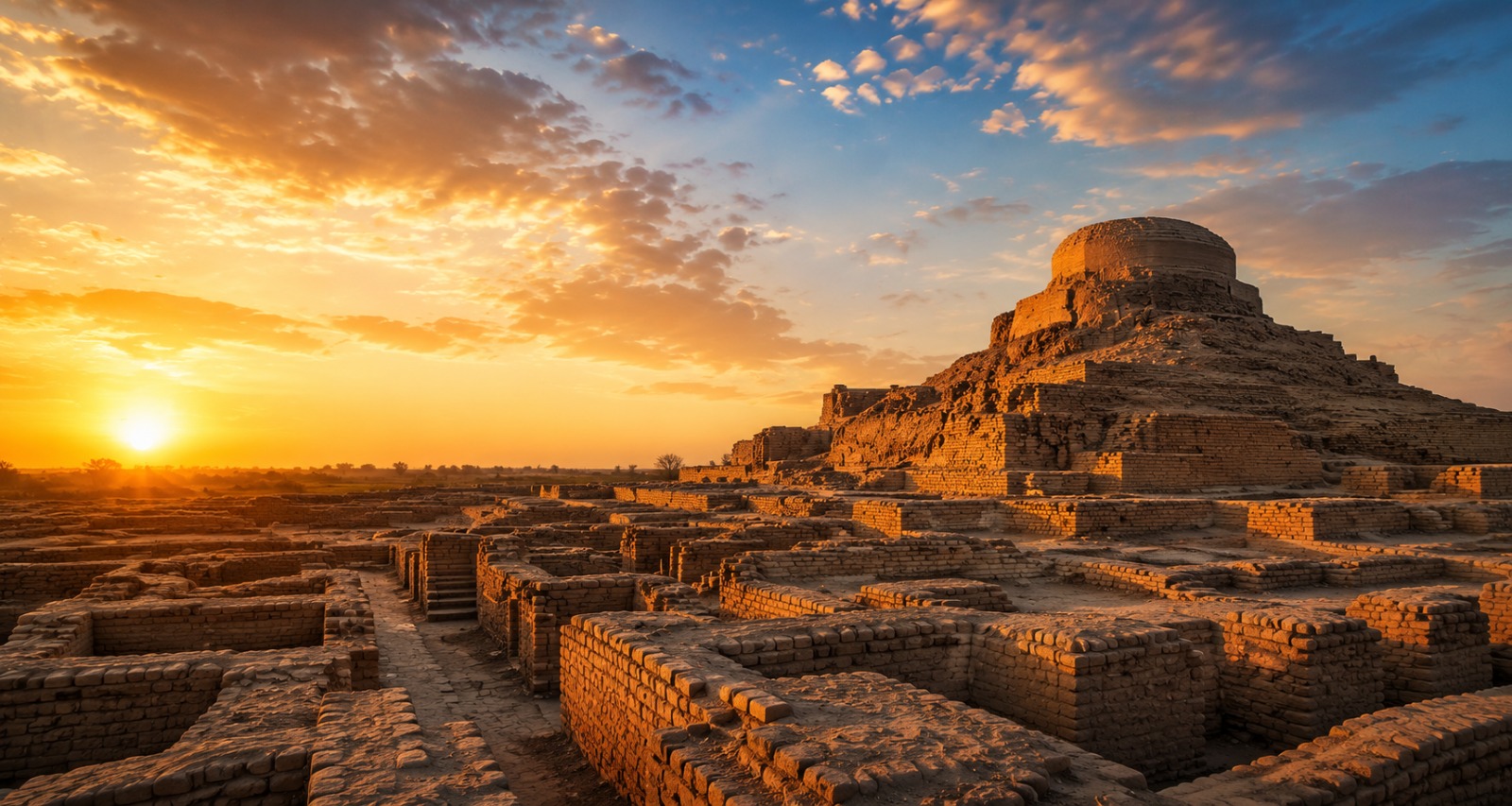
Pakistan is a country created in the Asian region after the division of the area called India. The cultural history of this new country Pakistan extends beyond the Indus valley civilization more than 5000 BCE. The Indus River emerges from the great northern Himalayan mountain range down to the Arabian Sea. During the course of its long journey to the sea from prehistoric times it has through its several tributaries enabled several civilizations to come into being. These days the river Indus flows from north to south through Northwestern Frontier, the Punjab, Baluchistan and Sind in Pakistan. Pakistan is a country of several ethnic groups of people and includes the Pathans, the Punjabis, the Baloch and the Sindhis. While Urdu is the national language of Pakistan, all these regions mentioned above have their own language, their literature, music, art and they have their own distinct cultural and traditional practices. Art in Pakistan presents an unusual diversity in its expression of painting music and even its crafts that are discernible in their distinctive designs of even utilitarian objects of common use. Pakistan shared and participated in thousands of years of cultural activity with South Asia. About seven decades ago, it gained independence and has since then acquired a noticeable cultural identity of its own. Before independence the area of Pakistan was famous for several culturally distinctive features. Among the most famous ones was the Indus Valley Civilization, a major part of which is located in Pakistan though a small portion also extends into India and Afghanistan. The second was the city of Taxila in Pakistan which housed one of the oldest Universities of the world. The area around Taxila was also the main production center of the Gandhara Sculptures, though there were also beautiful Buddhist sculptures and paintings made in India. In Afghanistan also the Sculptures of Buddha in Bamiyan were a spectacular sight. The third cultural legacy that Pakistan inherited from its past, that was also widely shared with all of India were the exquisitely executed miniature paintings. These paintings originated when Muslim conquerors brought Persian and Chinese art influences and artists with them to South Asia.
Lahore and Modern Art
Lahore became a major art center in the Mughal period, especially during Emperor Akbar’s seventeen-year stay in the city. Many artists who came with him remained in Lahore, building an active community that grew over time. They often travelled with the Mughal court to the Punjab hills but frequently chose to stay behind in Lahore when the court returned. This movement later shaped the understanding of Pahari painting: in 1922, Lahore artist Abdul Rahman Chughtai and his brother Abdullah Chughtai concluded, after travelling through the hill states, that state patronage there was limited and that many Pahari artists lived in Lahore and Amritsar, migrating seasonally to the hills. After the decline of the Mughal Empire, miniature painting survived in Punjab under the generous patronage of Sikh rulers. Historical records and oral accounts still recall hundreds of highly skilled painters, even though very few of their works are preserved with proper attribution; the memory of their presence endures in places like “koocha musawaren” (painters’ street) in Lahore’s old city.
Under British rule, local art was usually treated as craft, and preference was given to those who could communicate in English. Before photography became common, British officials often relied on local artists to visually record landscapes, buildings and “quaint” scenes for correspondence sent back home. Many such illustrated letters survive, but the identities of the artists remain largely unknown. At the same time, the British established five art schools across India, recognizing Lahore as an important center by founding the Mayo School of Art. Initially a craft-focused institution, it opened a dedicated art department in 1914 under S. N. Gupta from Bengal, who introduced the Japanese watercolor wash technique and attracted many talented local painters. The school later evolved into what is now the National College of Arts (NCA). A major breakthrough came with the 1924 Wembley Exhibition in London, where Lionel Heath organized a Punjab pavilion. The exceptional quality of the works shown under the Punjab banner drew widespread attention and led to the recognition of a distinct “Punjab School of Painting.” From roughly 1920 to 1940, Lahore experienced a flourishing art scene: noted artists and critics settled in the city, the Lahore Art Group organized annual exhibitions for two decades, and lectures, radio talks and articles on art became common. This period saw the rise of artists such as Chughtai and Allah Bakhsh and led the University of the Punjab to establish a Fine Arts Department in 1940, headed by Anna Molka Ahmad. Through her teaching, curriculum design and extensive travel across Punjab, she promoted Fine Arts as a serious field of study and helped train a generation of artists, many of whom worked in Western painting styles.
Partition and Artist Groups
The Partition of 1947 disrupted the strong artistic momentum built in the preceding decades. Punjab University lost many students who migrated to India, and the existing networks around art and education were severely shaken. In response, young artists began forming their own groups to keep the art scene alive. One of these was the Palette Group, a circle of university students that managed to organize one or two exhibitions. A more sustained initiative came from artist and teacher Moyene Najmi, who founded the Lahore Art Circle. He converted his drawing room into a small gallery called Skyline, where more than thirteen exhibitions were held. Artists such as A. J. Shemza, Ali Imam, Sheikh Sardar and Ahmed Pervez were part of this circle, later joined by Maryam Shah, Razia Feroze and Qutb Sheikh. With the arrival of Shakir Ali in Lahore, many of these artists began experimenting with abstraction, pushing Pakistani art into new modernist directions. Some years later, a larger national body called Artist’s Equity was formed, bringing together painters, musicians, actors and radio announcers from across Pakistan. Led initially by writer-artist Anwer Sajjad and later by Ijaz ul Hassan, and including prominent figures such as Farida Khanum, Tariq Aziz and Naeem Tahir, it worked as a collective bargaining group. Among its achievements was securing better pay for radio employees who had previously been poorly compensated. Although Artist’s Equity also organized exhibitions, it was eventually banned. For a long period, Alhamra and the Lahore Museum were the city’s main exhibition venues, and this era was marked by censorship, including the removal of works from shows. Artists sometimes responded collectively, for example by threatening to withdraw all their work or by rehanging removed paintings, such as those by Iqbal Hussain, on the outer railings of Alhamra. The establishment of the Lahore Art Gallery by Shehla Saigol marked a turning point, as it became the first systematically run private gallery, offering artists a non-censored space and setting a model later followed by many new galleries in the city.
Institutions and Associations
Institutions and artist-led associations have played a crucial role in shaping Pakistan’s art landscape. On the educational side, key milestones include the transformation of the Mayo School into the National College of Arts and the establishment of the Fine Arts Department at the University of the Punjab, both of which created structured pathways for art education and professional practice. At the organizational level, a major development came in 1985 with the formation of the Artists Association of Pakistan at the Pakistan National Council of the Arts (PNCA) in Islamabad, initiated by PNCA chairman Khalid Saeed Butt. He brought together artists from all four provinces to create a national platform, with Ijaz ul Hassan elected as president and Karachi-based artist Bashir Mirza as Secretary General. Each province formed its own chapter with a chairman and executive council. Among these, the Punjab unit, led by Mian Ijaz ul Hassan with Ghulam Mustafa as secretary, developed the most consistent record of activity. Over the past three and a half decades, it has organized annual exhibitions without interruption, many of them national in scope with artists from all provinces. These exhibitions have often been accompanied by seminars and talks featuring academics and experts from around the country and have been taken on tour to smaller towns and cities where they attract large audiences. This outreach has given many young artists a first professional platform and helped them become recognized figures. The Association’s leadership has also encouraged the establishment of art departments in colleges in cities such as Quetta, Peshawar, Hyderabad (Sindh) and Sargodha. Through sustained exhibition programs, educational initiatives and inter-provincial collaboration, these institutions and associations have been central to nurturing Pakistan’s art and expanding access to it nationwide.